
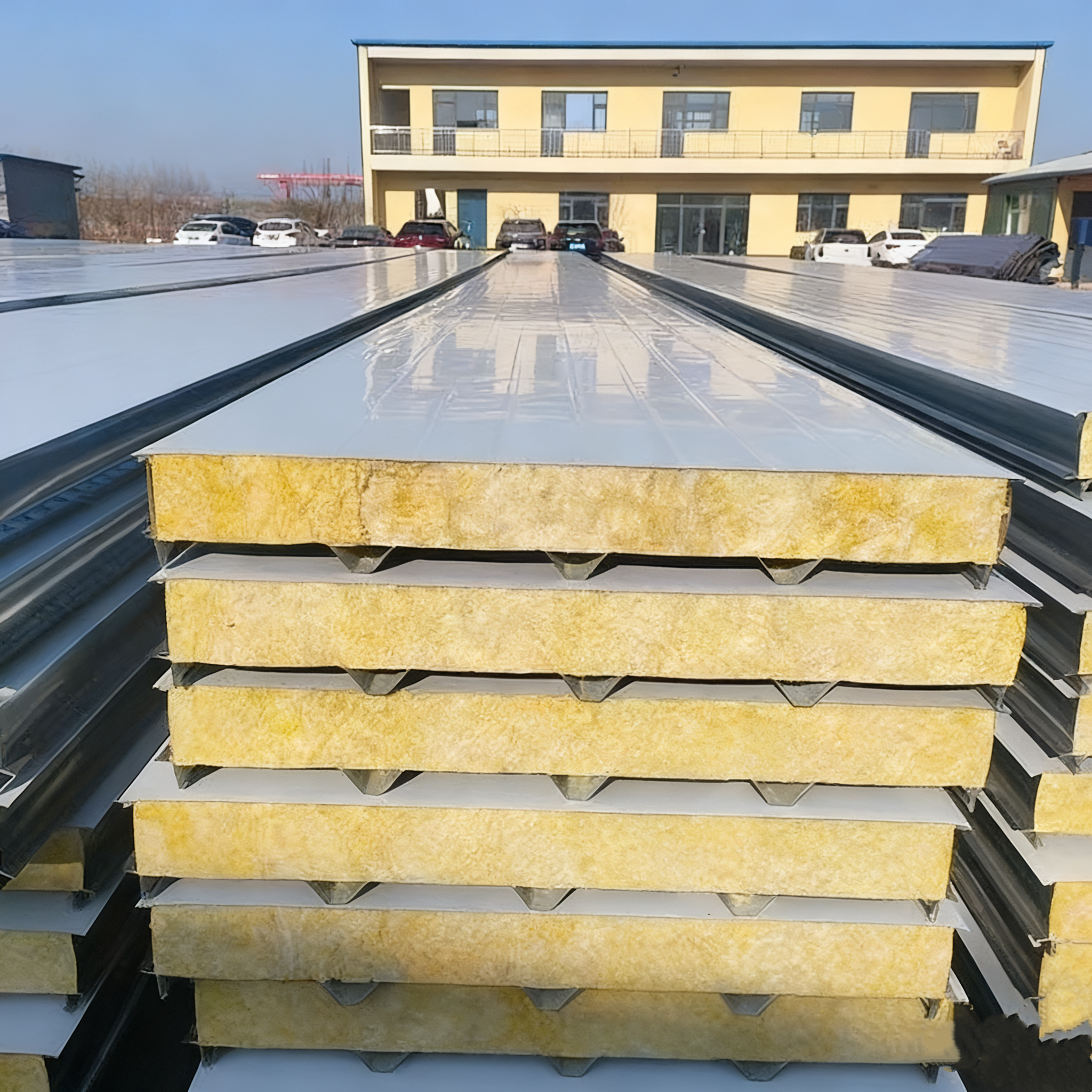
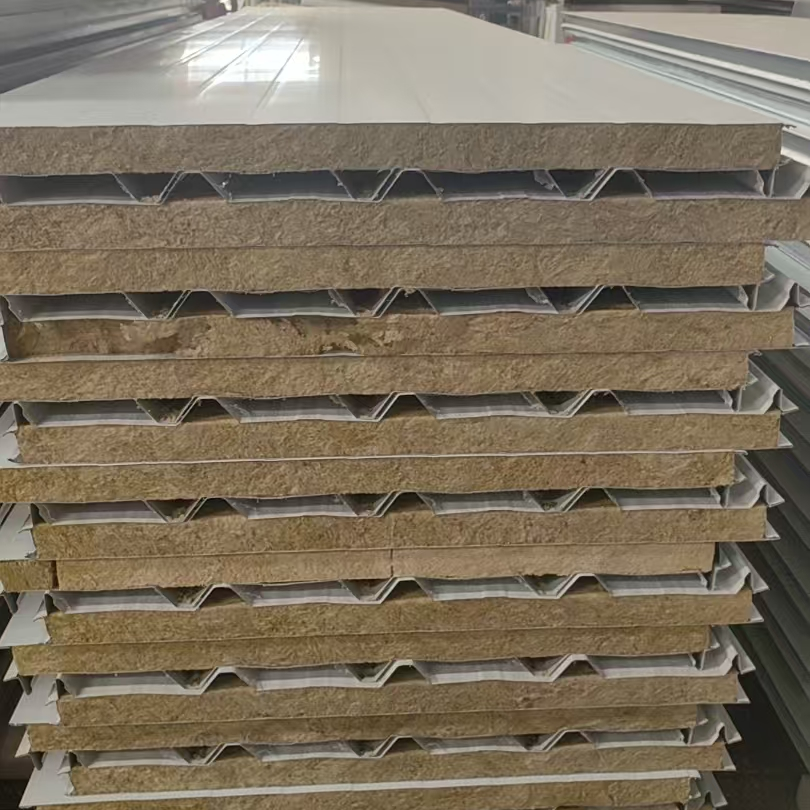
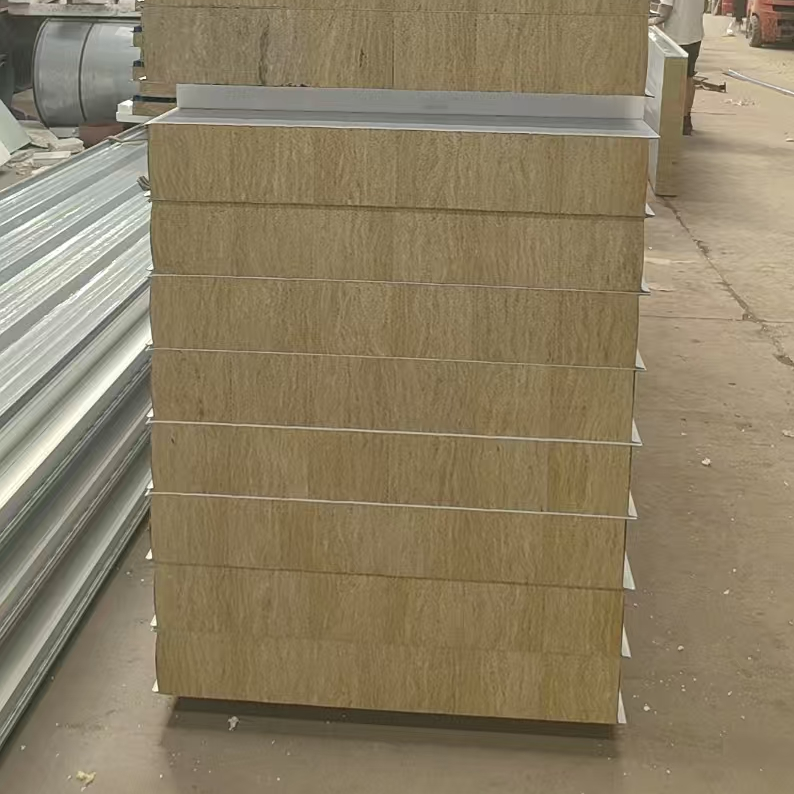
Sandwich panels are composite panels with metal sheets on both sides and insulation material in the middle.
They are mainly used in cold storage, factory exterior walls/roofs, and prefabricated building exterior walls and roofs.
The advantages are better insulation and a more aesthetically pleasing appearance compared to single-panel panels; the disadvantage is a higher price.
Insulation Material Classification:
| Insulation Material | Fire Rating | Combustion performance description | Bulk Density(kg/m³) |
|---|---|---|---|
| Rock Wool | Standard A | Non-flammable, no open flame, does not burn at high temperatures | 80-150 |
| Glass Wool | Standard A | Non-flammable, no open flame, does not burn at high temperatures | 30-80 |
| EPS(Polystyrene Foam) | Standard B | Depending on the specific fire resistance rating and combustion performance | 20-30 |
| Polyurethane Foam | Standard B | Depending on the specific fire resistance rating and combustion performance | 30-60 |
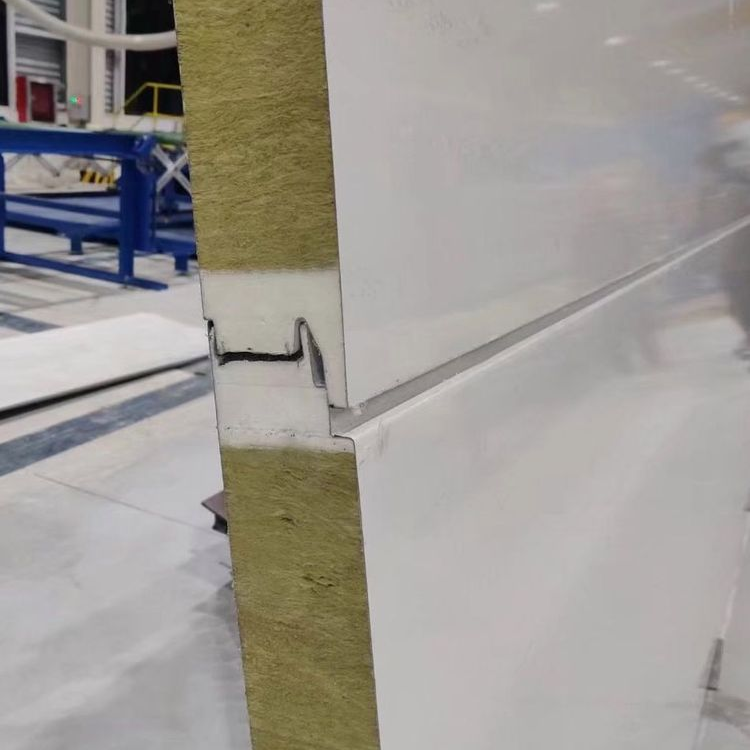
Edge Sealing Methods and Comparison:
| Edge Sealing Methods | Bulk Density | Installation Method | Overlap Method | Features | Application Areas |
|---|---|---|---|---|---|
| Steel Strip Edge-Sealed Rock Wool Composite Panel | 60-80KG | Exposed nail fixing | Flat overlap | Basic waterproofing, suitable for dry environments | General factory interior walls, warehouse partitions, temporary buildings, auxiliary rooms |
| Hidden Nail Type Rock Wool Panel with Polyurethane Edge Sealing | ≥90KG | Concealed nail splicing | Concave convex tongue | Sealed and waterproof, suitable for humid/outdoor environments | High end factory exterior walls, commercial buildings, cold chain warehouses, high humidity/seaside areas |
Widely used in walls and roofs of industrial plants, warehouses, stadiums, cold storage, clean rooms, office buildings, dormitories, and other buildings.